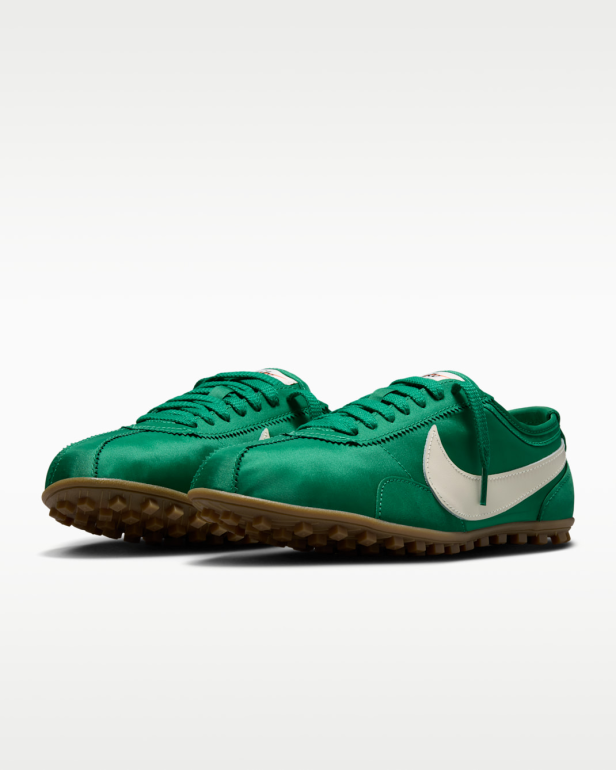
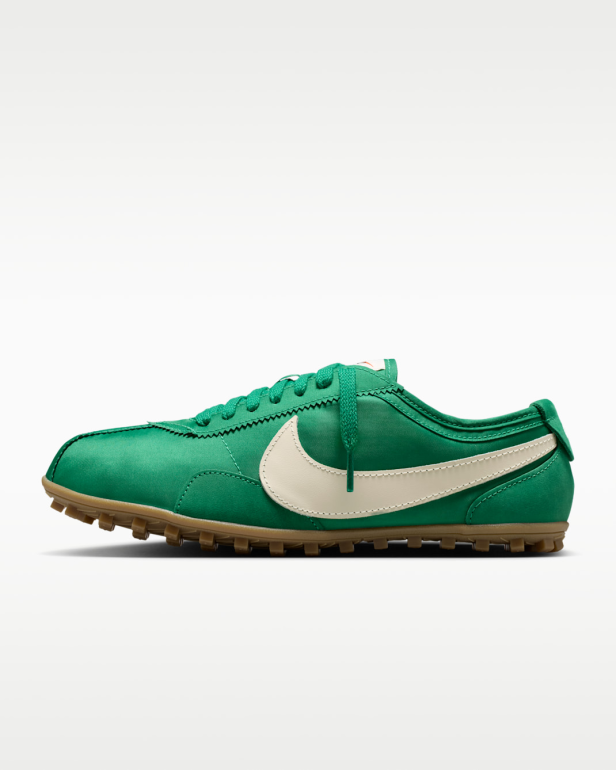
One of the running shoes that started Nike’s story is now one of the most stylish sneakers on the market. But how did we get here?
When Bill Bowerman and Phil Knight decided they wanted to turn their distribution model into a brand that developed products, they began tinkering with ideas around the sneaker models of the time. This tinkering eventually led to the development of the shoe we know now as the Nike Cortez. Blue Ribbon Sports, the distributor that would eventually become Nike, developed the Cortez, inspired by the sneaker designs of the time. This sneaker would eventually cause the rift that would lead BRS to go from distributors to manufacturers. With a clear direction for developing the product now in focus, Bowerman would begin cooking up Nike’s next move, literally cooking it up.
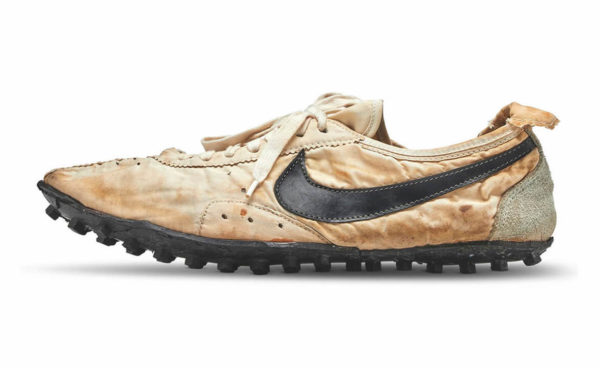
It was in 1969 when Bowerman would change the course of Nike’s history. That year, Bowerman began working on the idea of creating a tread-like outsole for a running shoe. It was this idea that led to Boweman famously using his wife’s waffle iron to create these treaded outsoles. It would take several years of testing, but those treaded outsoles would finally debut in 1972, on the Moon Shoe. The Moon Shoe, with only 12 pairs in existence at the time, debuted at the 1972 US Track and Field Olympic Trials. It was there that Nike’s legacy was born.
View this post on Instagram
Over half a century later, the legacy of the Moon Shoe still rings relevant. In fact, the shoes’ comeback has made them one of the most relevant sneakers in 2026. This time, though, its relevance is in lifestyle wear- largely thanks to the fashion space’s adaptation of such a historic sneaker.
Much like Bowerman’s experimenting with a waffle sole, the transition into the fashion world didn’t happen overnight. It began when Nike and other footwear giants began adopting the low-profile aesthetic. Tech runners have long had a presence in the sneaker space throughout the 2020s, but more recently, the more fashionable people have begun reaching for a cleaner and more sleek silhouette. Nike and Bode successfully scratched that itch when they reintroduced the Astrograbber. That shoe, perhaps not intentionally, was a litmus test. And fashionable sneaker heads responded. Thus, paving the way for perhaps Nike’s most important sneaker ever to make a return.
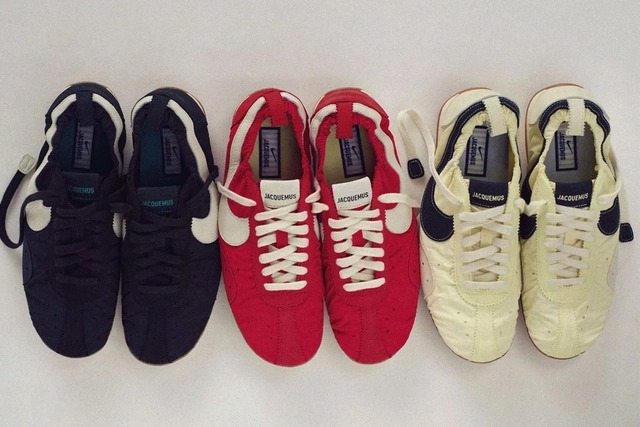
In the Fall of 2025, Jacquemus revived the ever-important sneaker. The campaign centered on the sneaker, and its iconic silhouette as tasteful, elegant, and something worth celebrating. The reality is that it was all true. Jacquemus and Nike’s approach was calculated, with the Moon Shoe appearing in campaigns for months before the sneaker officially came back. When it finally did, it sold out. The Jacquemus pairs felt as sparse as that dozen run Bowerman put together in 1972.
That vibrant red pair suddenly became the talk of every fashion influencer on TikTok, every denim-head on Instagram, and every person who wanted to buy into the lower-profile sneaker style. The Moon Shoe’s comeback was cosmic, pun intended. It was well-calculated by Nike and well executed by Jacquemus.
Now, Nike has one of the hottest sneakers of 2026. And it’s a sneaker that saw humble beginnings in 1972.
Nike’s latest round of in-line pairs of the Moon Shoe launches on July 17th, via Nike.